Select Publications
Editorial and Scholarly Writing
Dietrich’s Potato Salad (2Late Magazine)
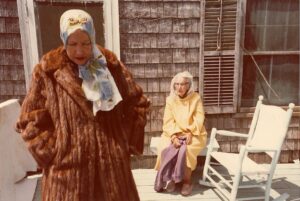
Over the last year or so, I’ve also developed an all-consuming obsession with millinery. In the process of attempting to transform my space into a makeshift 1930s-style boudoir, and my comically small Brooklyn wardrobe into a miniature archive of screen-fashion eccentricity, I began to question: is fashionable glamour just as much about moxie and intention as it is access?
The War on Glamour (Articles of Interest)
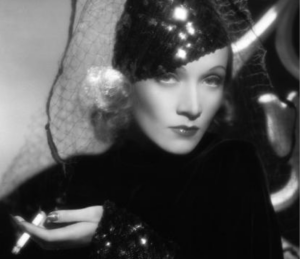
Skirt lengths supposedly rise when the economy buckles. This theory, referred to as the “hemline index,” suggests a direct relationship between women’s wardrobes and economic conditions. Although skirts did shorten briefly during WWI and while fashion is, and has always been, a reflection of its time, truly there’s not any predictable way that clothes respond to hardship.
Ready To Tear (Kitsch Magazine)
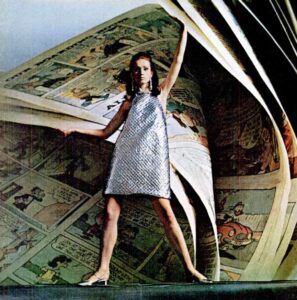
In Europe and the United States in the 1960s, the throwaway ethos of paper combined with the spirit of modernity gave way to a brief, but colorful craze for paper fashions.
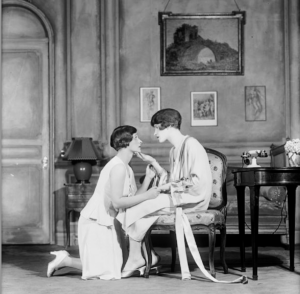
Through Her Eyes (2Late Magazine)
In the 1920s, as modernism swept through urban landscapes, a vibrant lesbian subculture began to blossom across Europe and the United States. This movement in the arts coincided with the opening of lesbian bars in major cities, as well as significant changes in women’s fashion.
(For “Through Her Eyes” see Page 43)
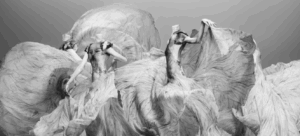
Savage Beauty, Revisited (Haloscope Magazine)
McQueen’s theatricality, though undeniably potent, muddies the water between critique and complicity. Unfortunately, in the end, the spectacle seems to have dulled the garments potential to reshape public understanding of historical violence, reducing it to an aestheticized shock.
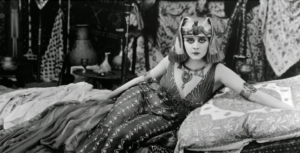
Egyptomania: What Does it Mean to Dress Like an Egyptian? (Haloscope Magazine)
To what extent does this obsession reflect the broader colonial nature of the Western world? Hollywood’s representations of Cleopatra and other stories from Egyptian antiquity have been steeped in Orientalism in the name of fashionable aesthetics as seen by the West.
Substack
Selected Essays from My Newsletter, Victorian Secret
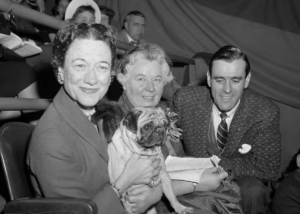
Bling is my favorite color
Style reporting live from the Westminster Kennel Club Dog Show
Westminster offers only one deliciously vague directive: “The outfit should not distract from the dog.” A guideline that presumes a shared understanding of what constitutes a distraction, which has, paradoxically, produced one of the most visually arresting spectacles, dog and human alike, in competitive sport.
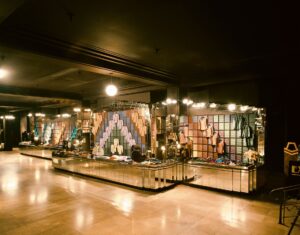
The Most Beautiful Store in the World: Inside Barbara Hulanicki’s 1970s Art-Deco Fantasy Lifestyle Emporium
In Barbara Hulanicki’s imagination, a rooftop garden populated by live flamingos, wicker peacock chairs, Deco-inflected interiors, light fixtures draped with ostrich plumes and Egyptomania-themed dressing rooms should all exist within the same four walls of a department store. She insisted that self-making, beautiful clothes, artifice, and excess should never be a privilege of the few and that languid cinematic glamour be accessible to everyone.
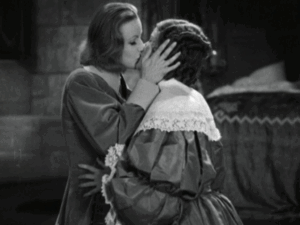
“The lovely girl who dressed in male attire and refused to marry”
This essay is an analysis of costume designs by Gilbert Adrian in Queen Christina (1933) starring Greta Garbo. It touches on queerness and deviance in pre-Hays Code Hollywood, how fashion in both film and mass-market retail shaped a gay and lesbian imagination in early 1930s America, and how costumes function as both a tool for queer-coding characters and enforcing historical (in)accuracies.
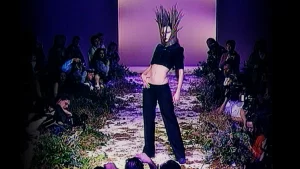
Lee McQueen’s “Highland Rape:” Scottish Tartan and Depictions of Violence on the Catwalk
This essay analyzes how the theatrical nature and violent imagery of the Alexander McQueen’s “Highland Rape” complicates his professed aim of empowerment and historical narrative. Torn garments exposing the body, restrictive styling, and an aggressively choreographed runway walked a fine line between spectacle and subversion.
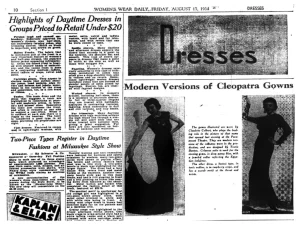
Final Notes on High-Fashion Egyptomaniacs (Installment #3)
This essay looks at how Cleopatra (1934) solidified the image of the Egyptian queen as a seductive, fashionable femme fatale, and how her sartorial legacy—most notably through Elizabeth Taylor’s later portrayal—continues to shape contemporary aesthetics in Western material culture.
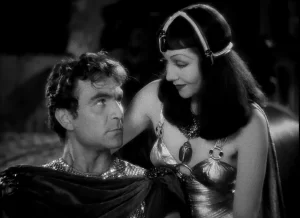
Egyptomania in American Cinema! (Installment #2)
This essay discusses the costume design of two on-screen tellings of the story of Queen Cleopatra. The 1934 film presents a Hays Code–abiding fantasy of the Orient, filled with gold lamé and bias-cut silks. Similarly to Travis Banton’s designs for Claudette Colbert, Renie drew on contemporary fashion trends, incorporating an “Egyptian” flair to sell the story of the queen.
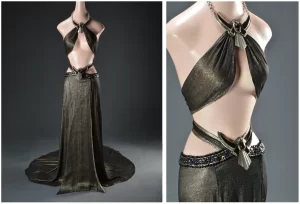
A History of Egyptomania in Material Culture: Two Hundred Years of Sartorial Orientalism (Installment #1)
This essay traces the history of Egyptomania in Western visual culture, centering fashion and costume design.
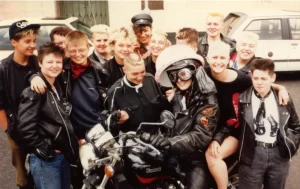
How Lesbian Fashion Made It Out of the Closet: In Conversation with Fashion Historian Eleanor Medhurst
This essay is a discussion of how distinctive elements of lesbian style have entered mainstream fashion. It traces the historical evolution of twentieth-century Euro-American lesbian fashion and explores its connection to modern shifts in identity, community, and visibility.
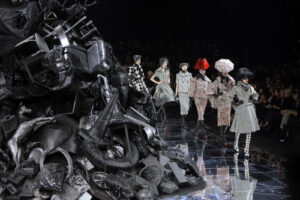
Fashion Historical References in Alexander McQueen’s “Horn of Plenty” (Fall 2009 RTW)
This essay looks at various fashion historical references in Alexander McQueen’s Fall 2009 RTW “Horn of Plenty, described by Lee himself as a retrospective of his fifteen shocking years in fashion.
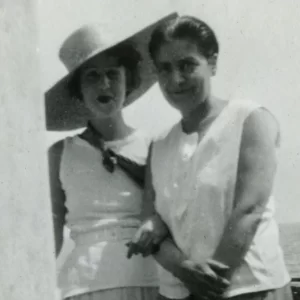
The Queer Fashioning of British Vogue: The Lesbian Couple who Modernized Fashion Journalism (1922-1926)
This essay looks at the legacy of Dorothy Todd and Madge Garland who worked hand in hand at British Vogue as Editor and Fashion Editor for about half of a decade, pioneering the energetic spirit of jazz age fashion journalism. Just as the nature of fashion trends, their time at the magazine came and went and was eventually forgotten.
The Underpinnings Museum
Research and Object Descriptions for The Underpinnings Museum Digital Collections
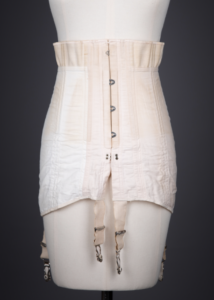
Cotton & Overlocked Elastic Panel Underbust Corset by Thomson’s Glove Fitting
This cotton and overlocked elastic panel underbust corset, referred to as the “Thomson’s Glove Fitting” range by Langdon and Batcheller, dates to circa 1921. Constructed with panels of elastic at the underbust for additional flexibility, with herringbone cotton coutil through the rest of the body. The elastic panelling is cut from a larger fabric and is finished with an overlock stitch, rather than being made from a finished trim.
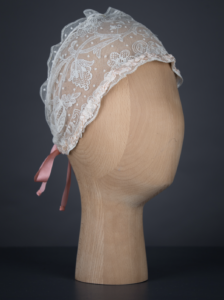
Lace & Ruffle Silk Ribbon Boudoir Headband
This circa 1920s boudoir headband is unbranded, handmade, and composed of lace and ruffled silk. A boudoir cap is a style of lingerie headwear, commonly worn from the nineteenth into the early twentieth century. They were originally intended to be worn over unstyled hair, and in the privacy of the boudoir, typically paired with sleepwear. In the 1910s and 1920s, they were commonly worn to protect women’s hairstyles during sleep.
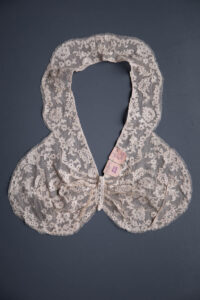
Machine Lace Nightgown Bodice Insert
This French-made nightgown bodice insert, sold at Aux Trois-Quartiers, epitomizes 20th-century innovations in women’s fashions. It was made circa 1930-40s. The use of machine-made lace, indicated by the label which reads “dentelle mechanique,” reflects the growing adoption of industrial production in interwar fashion by the textile industry.
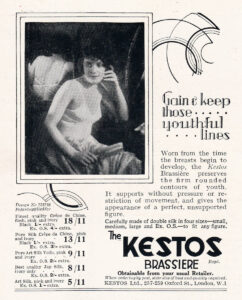
‘Gain & Keep Those Youthful Lines’ Advertisement by Kestos
This circa 1920s British advertisement by lingerie brand Kestos, depicts a seated young woman with waved, coiffed hair, wearing a strappy two-cupped brassiere, and what appears to be a sheet or towel draped over her legs. Her image is framed by Art-Deco-style illustrations of curvilinear, abstract shapes.
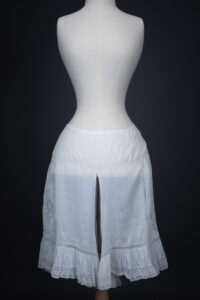
Hand Stitched Cotton Lawn Open Drawers With Valenciennes Lace & Pin Tucks
These unbranded hand stitched cotton lawn open drawers with valenciennes lace and pin tucks date to approximately 1900. Across Europe and the United States, split drawers were commonly worn around, and just after the turn of the century, with the open cut a functional necessity when worn with the multiple layers of fashionable outerwear.
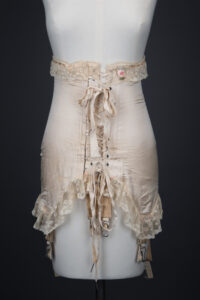
Silk front-Lacing Corset with Lace Trim by Gossard
This 1920s front-lacing corset with lace trim is made by the American undergarment brand, Gossard. The corset is made of silk satin, coutil (a durable, tightly-woven fabric made of cotton), and adorned with machine-made lace as well as rosette details. The corset includes six suspender straps to be attached to a ladies stockings, which read “velvet grip.”
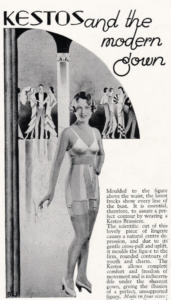
‘Kestos and the Modern Gown’ Advertisement by Kestos
This circa 1930s Kestos advertisement depicts a smiling young woman with waved, bobbed hair, donning a two-cupped brassiere, a corset paired with stockings, and a fashionably high-heel. Behind her stretches an Art-Deco-style illustration showcasing men and women socializing in an elegant building framed by neoclassical columns.
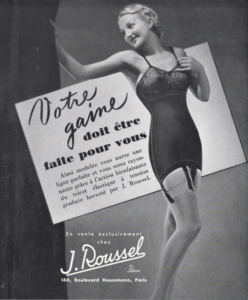
‘Votre Gaine Doit Être Faite Pour Vous Advertisement by J. Roussel
This circa 1930s lingerie advertisement by French company J. Roussel depicts a smiling woman, pictured off-center, dressed in a girdle with a bra, suspender straps, stockings, and fashionable high-heeled shoes. The fit and style of the lingerie reflects the fashionable silhouette of the 1930s, with a focus on an athletic, slightly curvy feminine figure, suitable for the romantic, flowing fashions of the 1930s.
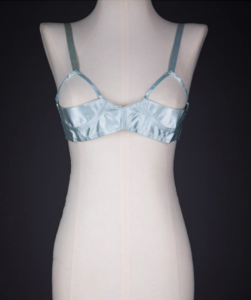
Pale Blue Satin Sling Bra By Charnaux
This German-made sling bra, crafted in a pale blue rayon satin, was produced by the twentieth-century women’s undergarment manufacturer Charnaux. The barely-there cups of a sling bra offered a gentle lift to the breasts, while the exposed upper cup allowed the nipple to provide a gently pointed bust silhouette. After a decade of flattening the bosom, smooth bust lines became gradually replaced with shaped brassieres like this one.
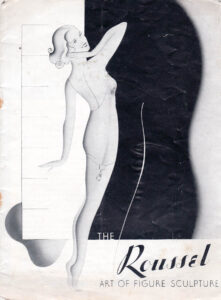
‘The Art Of Figure Sculpture’ Lingerie Catalogue By J. Roussel
This 1930s catalogue by French lingerie company J. Roussel, titled “The Art of Figure Sculpture,” offers a glimpse into the era’s design sensibilities, as well as the fashionable female form. The cover page of this catalogue features an elegant illustration of a picturesque smiling woman, with a curly coiffure, draped in delicate lingerie. Positioned slightly off-center, she is surrounded by abstract black and white shapes, evoking the avant-garde influence of surrealism, championed by visual artists like Salvador Dali, as well as fashion designers like Elsa Schiaparelli.
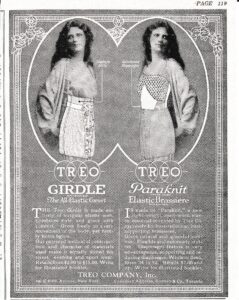
Girdle and Paraknit Brassiere Advertisement by Treo Co.
The advertisment’s emphasis on “movement of the body” aligns with the new freedoms many women experienced in the 1920s, including participating in sporting activities, which required both undergarments, and outerwear that allowed for more mobility. However, a slim, narrow figure was still the female ideal, and brands created undergarments designed to create the illusion of a straight, column form.